What Mui Ne’s Hidden Treasures Taught Me About Light and Craft
Walking through Mui Ne’s fishing villages at golden hour, I wasn’t just chasing sunsets—I was discovering stories woven into every handcrafted mat, every dyed fabric fluttering in the sea breeze. This coastal gem in Vietnam doesn’t just offer stunning backdrops; it reveals a living culture where light, color, and local craft merge. Through my lens, I found something deeper: authenticity in motion. Here’s how photography unlocked Mui Ne’s soul, one handmade treasure at a time.
First Light in Mui Ne: A Photographer’s Awakening
There is a moment in Mui Ne just after dawn when the world seems suspended between shadow and brilliance. The sun, still low on the horizon, spills across the red sand dunes like liquid amber, transforming their curves into living sculptures. The air is cool and carries the faint salt of the sea, mingling with the scent of charcoal from fishermen’s early fires. This is not just a landscape—it is a stage, carefully lit by nature, inviting observation and reflection. For a photographer, these quiet hours are sacred. The soft, diffused light wraps around textures—the rough weave of fishing nets, the cracked paint on wooden boats, the delicate fronds of coconut palms swaying overhead—revealing depth and dimension in ways harsh midday sun never could.
What makes Mui Ne particularly compelling is how its natural light enhances the rhythm of daily life. As the sun climbs, it traces the paths of villagers heading to the shore, baskets balanced on shoulders, their silhouettes stretching long across the sand. The early glow does more than illuminate; it connects. It draws attention to the details often overlooked: the way a woman’s fingers move swiftly over a half-finished mat, or how sunlight filters through the gaps in a bamboo drying rack. These are not staged scenes but moments of organic beauty, shaped by generations of living in harmony with the environment.
The dunes themselves, though famous for their dramatic shapes and shifting sands, are not the only source of visual wonder. Along the coast, clusters of brightly painted fishing boats rest on the shore, their hulls reflecting the changing sky. Each vessel bears the traditional eye painted on its prow—a symbol believed to guide fishermen safely home. In the morning light, these eyes seem almost alive, watching the water with quiet vigilance. Photographing them requires patience and timing. The best shots emerge when the light is still low, casting long shadows that emphasize the curves of the boats and the weathered textures of their wood. This interplay between light and craft sets the tone for deeper cultural exploration, reminding visitors that Mui Ne is not merely a destination for scenic views but a place where artistry is embedded in everyday survival.
Beyond the Postcard: Why Mui Ne’s Crafts Deserve a Closer Frame
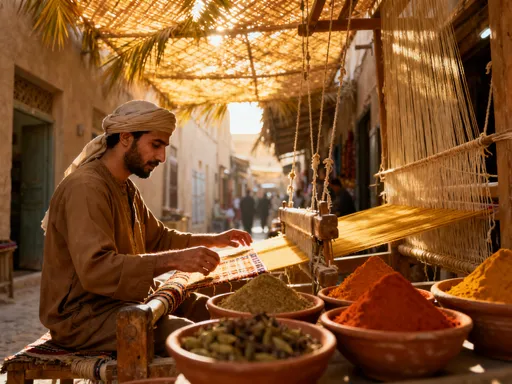
Tourists often come to Mui Ne for the postcard-perfect dunes or the turquoise waters, but those who linger begin to see beyond the surface. They notice the women sitting outside their homes, weaving palm fronds into conical hats or repairing nets with practiced precision. These crafts are not tourist performances; they are essential skills passed down through generations, rooted in necessity and refined over time. Unlike the mass-produced souvenirs sold in beachside kiosks, these handmade items carry history, intention, and identity. To photograph them is to acknowledge a deeper truth: that culture lives not in monuments but in motion—in the hands that shape, mend, and create.
The weaving of baskets, mats, and hats using locally sourced materials like rattan, bamboo, and nipa palm is a tradition deeply tied to the region’s coastal ecology. Each material is chosen for its durability and availability, shaped by artisans who understand its strengths and limitations. A simple mat, for instance, may take an entire day to complete, with each strip of palm carefully dried, split, and interlaced. These objects are not decorative—they serve real purposes in fishing, farming, and household life. Yet their functional nature does not diminish their beauty. On the contrary, it enhances it. There is elegance in efficiency, a quiet grace in objects made to last.
What sets these crafts apart is their sustainability. No plastic molds, no factory lines—just human hands working with natural materials. The dyes used in textiles often come from plants like indigo, turmeric, and lac, producing rich, earth-toned colors that fade gracefully over time. This contrasts sharply with synthetic alternatives that pollute waterways and degrade quickly. By choosing to focus on these authentic practices, photographers can help shift the narrative from consumption to appreciation. Instead of capturing crafts as exotic curiosities, they can present them as testaments to resilience, ingenuity, and environmental wisdom. In doing so, they honor the people behind the work, not just the products they produce.
Chasing Color: The Art of Vietnamese Hand-Dyed Textiles
One of the most vivid experiences in Mui Ne is witnessing the process of hand-dyeing fabrics under the open sky. In small workshops and village yards, women unfold bolts of cotton and silk, preparing them for immersion in large vats of natural dye. The air carries the deep, earthy aroma of indigo—a scent both ancient and alive. As the fabric soaks, oxidizes, and dries, its color transforms from greenish-yellow to a profound blue, layer by layer. This alchemy, achieved without chemicals or machinery, is a testament to patience and knowledge honed over centuries.
Sunlight plays a crucial role in this process. After each dip, the cloth is laid out to dry, often stretched across frames or hung on lines where the breeze lifts the fabric like sails. The morning and midday sun reveal the true depth of the dye, intensifying the hues and highlighting subtle variations in saturation. For a photographer, this is a moment of dynamic visual interest. The fluttering fabric creates movement, while the contrast between deep blues and the pale sky offers striking compositional possibilities. Timing is key—capturing the fabric at the peak of its drying cycle, when moisture still clings to the fibers, adds a luminous quality to the image.
Beyond indigo, other natural dyes produce a spectrum of colors rooted in the local landscape. Turmeric yields golden yellows, while mangrove bark imparts warm browns. Some artisans use the lac insect to create deep reds, a technique shared across parts of Southeast Asia. These colors are never uniform—they vary with the season, the water, and the fabric’s absorbency, making each piece uniquely imperfect. This variation is not a flaw but a signature, a mark of authenticity that industrial production cannot replicate. Photographers who document this process should aim to capture not just the final product but the entire sequence: the gathering of raw materials, the stirring of vats, the careful folding of dyed cloth. These moments tell a fuller story, one that celebrates labor, tradition, and the intimate relationship between people and their environment.
The Fishermen’s Craft: Nets, Boats, and the Rhythm of Work
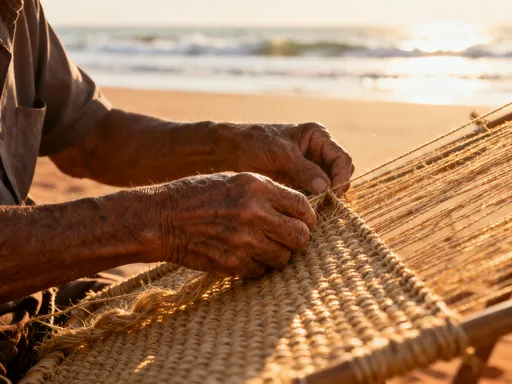
On the shoreline of Mui Ne, the sea is both provider and adversary. Each morning, fishermen push their colorful wooden boats into the surf, returning hours later with baskets full of silvery fish. But before the journey begins, there is work—constant, meticulous, and often unseen. One of the most enduring crafts in the community is net mending. Seated on low stools or squatting on the sand, men and women inspect every knot of their nets, repairing tears with swift, practiced movements. These nets, hand-knotted from durable twine, are not disposable. They are valuable tools, tended with care, often repaired daily. The rhythm of their fingers moving through the mesh is hypnotic—a blend of focus and familiarity that speaks of a life spent in service to the sea.
Photographing this work requires sensitivity and respect. Close-up shots of weathered hands, calloused from years of labor, can convey strength and dignity without veering into voyeurism. Low-angle compositions, taken from near ground level, emphasize the physicality of the task while placing the subject in command of the frame. Early morning light, soft and directional, enhances texture—the frayed edges of rope, the grain of sun-bleached wood, the glint of dew on nylon mesh. Fog or haze, common during cooler months, adds atmosphere, softening backgrounds and drawing attention to the central action.
The boats themselves are works of art, painted in bold blues, greens, and reds, their names often written in elegant script along the hull. The eyes on the prow, a tradition shared across coastal Vietnam, are more than decorative—they are spiritual guardians, believed to help the vessel navigate safely through storms and darkness. Each boat is unique, its design adapted to local fishing methods and sea conditions. Some are built for shallow waters, others for deeper offshore runs. The craftsmanship extends to every detail: the joinery of the planks, the shape of the bow, the balance of the rudder. To photograph these boats is to document a heritage of maritime skill, one that remains vital despite the encroachment of modern technology. Even as motorized vessels become more common, many fishermen still rely on hand-built boats, maintaining a link to ancestral knowledge that cannot be replaced by speed or convenience.
Markets as Living Galleries: Where Commerce Meets Creativity
No visit to Mui Ne is complete without a walk through its local markets, where commerce unfolds in full sensory detail. These are not curated craft fairs but living spaces, pulsing with activity and authenticity. Stalls overflow with dried fish, woven baskets, clay pots, and hand-sewn garments. The air is thick with the scent of salt, smoke, and ripe fruit. Vendors call out prices in rhythmic tones, their voices blending with the chatter of customers and the occasional cry of a passing motorbike. For a photographer, this environment offers endless opportunities for candid, storytelling images—moments of exchange, concentration, and quiet pride.
One of the most compelling aspects of these markets is the visibility of the creative process. A woman may be weaving a basket while selling her previous work. A potter might demonstrate how to shape clay on a simple wheel. These are not performances for tourists but real work conducted in public, where production and trade happen side by side. Photographing such scenes allows viewers to see the continuity between making and selling, between skill and livelihood. It also highlights the dignity of labor—how artisans take pride in their craft, even when it is physically demanding or economically precarious.
Yet ethical considerations are paramount. It is important to ask permission before photographing individuals, especially when they are engaged in personal or sensitive tasks. A smile, a nod, or a simple gesture can go a long way in building trust. The goal should never be to capture poverty or hardship for dramatic effect, but to portray people with agency and respect. Focus on the details that tell a story: the pattern of a woven hat, the texture of a fisherman’s gloves, the way sunlight falls across a stack of ceramic jars. These elements, when composed thoughtfully, convey richness without exploitation. The market, in this sense, becomes a living gallery—not curated by curators, but by life itself.
Framing the Details: How to Photograph Craft Without Exploitation
Photographing traditional crafts carries a responsibility: to represent people and their work with integrity. It is tempting to seek the most dramatic or colorful shot, but true storytelling lies in authenticity, not spectacle. This means avoiding staged scenes where artisans pose unnaturally for the camera. Instead, photographers should wait, observe, and allow moments to unfold organically. A woman weaving a mat will not look up every few seconds—her focus is on her hands. Capturing that concentration, that quiet absorption, is far more powerful than a forced smile for the lens.
Lighting remains essential. Natural light, especially during the golden hours, enhances texture and depth without overpowering the subject. Side lighting can emphasize the weave of a basket or the grain of wood, while backlighting can create silhouettes that highlight form and movement. When shooting indoors or in shaded areas, a reflector can help balance shadows without introducing artificial light that might disrupt the scene. Composition should guide the viewer’s eye to the heart of the craft—the tool in hand, the material being transformed, the interaction between maker and object.
Another powerful technique is the use of sequences. Rather than a single image, a series of shots can tell a fuller story: a basket being made from raw materials, the artisan’s tools laid out, the finished product resting in sunlight. This approach honors the time and effort behind the craft, countering the misconception that handmade goods are quick or easy to produce. It also invites viewers to slow down, to appreciate process over product. In an age of instant gratification, such images serve as quiet reminders of the value of patience, skill, and continuity.
Ultimately, the goal is not to extract images but to engage with culture. This means listening, learning, and giving back—whether through fair purchases, proper credit, or simply showing genuine interest. A photograph should not be a trophy but a bridge, connecting the viewer to a world they might otherwise never see.
From Lens to Legacy: Bringing Mui Ne’s Spirit Home
Photography, at its best, is not just about capturing beauty—it is about preserving meaning. The images taken in Mui Ne can become more than memories; they can become acts of recognition. Each photo of a weaver, a dyer, a fisherman, is a testament to a way of life that persists despite global homogenization. These crafts are not relics of the past but living traditions, adapting and enduring. When travelers share these stories—through albums, social media, or conversations—they help sustain visibility and value for local artisanship.
Support can take many forms. Buying directly from artisans ensures fair compensation and strengthens local economies. Choosing handmade souvenirs over imported trinkets sends a message: that quality, authenticity, and sustainability matter. Even small purchases—like a handwoven hat or a piece of dyed fabric—contribute to a larger cycle of cultural preservation. Travelers can also advocate by sharing stories ethically, crediting the people behind the crafts, and avoiding narratives that reduce communities to stereotypes.
For the photographer, the journey does not end when the trip concludes. The images become part of a personal legacy—a visual diary of connection and discovery. They remind us that travel is not just about seeing new places but about seeing differently. In Mui Ne, light does more than illuminate; it reveals. It shows us the quiet dignity of hands at work, the resilience of traditions, and the beauty of objects made with care. These are not fleeting moments but enduring truths, captured not to possess, but to honor. And in that act of honoring, we become not just observers, but participants in a story that continues to unfold.