Wandering Through the Soul of Sharjah: Where Every Street Tells a Story
You know that feeling when you step off the plane and instantly sense a city’s rhythm? Sharjah hit me like a warm gust of desert wind—unfiltered, alive, and whispering stories through its sunlit alleys. Forget cookie-cutter malls; this is a place where art spills onto sidewalks, history lingers in coral stone walls, and every neighborhood breathes authenticity. I wandered for days, and honestly? This is the UAE you *haven’t* seen yet. Unlike its glitzier neighbors, Sharjah moves to a quieter, deeper beat—one shaped by centuries of tradition, a fierce love for culture, and a growing embrace of creative expression. It’s not about spectacle; it’s about substance. And for travelers seeking connection over consumption, this emirate offers something rare: a living narrative, written in stone, paint, scent, and sound.
The Heartbeat of Heritage: Exploring Al Majarrah and the Old Town
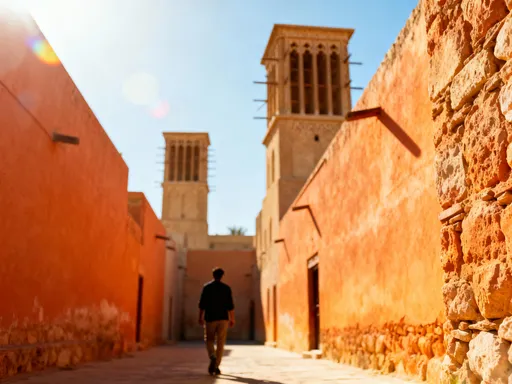
Walking through Sharjah’s oldest districts feels like stepping into a living museum where time hasn’t stopped—it has simply settled in with grace. Al Majarrah, one of the emirate’s most treasured neighborhoods, is a quiet testament to architectural wisdom passed down through generations. Here, wind-tower houses rise above narrow lanes, their tall, square chimneys designed not for ornament but for function—drawing cool air down into homes long before air conditioning existed. The buildings, crafted from coral stone harvested from the Arabian Gulf, gypsum for intricate latticework, and mangrove wood brought by dhow ships from East Africa, reflect a deep understanding of climate, trade, and community life. These materials were chosen not for luxury but for resilience, and their textures—rough, sun-warmed, slightly porous—invite the hand as much as the eye.
What makes Al Majarrah truly special is that it isn’t a preserved shell. People live here. Children ride bicycles between courtyards, elders sip Arabic coffee in shaded doorways, and the scent of oud smoke curls through the afternoon air. This is not heritage staged for visitors; it’s heritage lived. The call to prayer echoes softly between buildings, not as a tourist attraction but as a daily rhythm, a reminder that culture here is not separate from life—it is life. For travelers, this authenticity offers a rare gift: the chance to witness tradition not as performance, but as continuity.
Choosing to spend time in heritage neighborhoods like Al Majarrah enriches travel in ways that glossy attractions cannot. It allows for deeper understanding of Emirati identity—one rooted in family, faith, and stewardship of the land. These areas tell the story of a people who built not for show, but for survival and dignity. To experience them fully, timing and approach matter. Early mornings are ideal—before the sun climbs too high and while the streets are still cool and quiet. This is when the golden light slants across the alleyways, casting long shadows and illuminating details often missed in harsh daylight: the hand-carved patterns on wooden doors, the subtle variations in coral stone, the way a single potted plant thrives in a stone niche.
Respectful exploration is essential. Dressing modestly—shoulders and knees covered—is not only appropriate but appreciated. Speaking softly, asking permission before photographing people, and avoiding intrusive behavior ensures that visitors remain welcome guests rather than disruptions. Some restored homes now serve as cultural centers or small galleries, offering insight into domestic life in the 19th and early 20th centuries. These spaces, often managed by local historians or heritage groups, provide context without commercializing intimacy. The lesson of Al Majarrah is simple: true cultural richness is found not in grand gestures, but in the quiet details of everyday life.
Art in the Everyday: The Al Ras Area and Street Culture
While many cities designate art for museums and galleries, Sharjah lets it breathe in the open air—and nowhere is this more evident than in the Al Ras neighborhood. Once a quiet residential quarter, Al Ras has quietly transformed into a creative hub where tradition and innovation coexist. Graffiti murals stretch across blank walls, not as acts of rebellion, but as celebrations of identity. One afternoon, I turned a corner and found a young Emirati artist painting a vibrant geometric mural inspired by Bedouin weaving patterns. The design, bold in black, red, and ochre, pulsed with rhythm and symmetry—a modern interpretation of an ancient craft. He smiled as I paused to watch, explaining that his work was a tribute to his grandmother, who wove textiles by hand. This moment captured the essence of Al Ras: creativity rooted in memory, shared in public space.
Urban art in Sharjah is not about shock or irony; it’s about connection. Murals often depict local flora, traditional tools, calligraphy, or scenes from daily life—children playing, fishermen mending nets, women grinding spices. These images serve as visual stories, reminding residents and visitors alike of the values and rhythms that shape Emirati society. Unlike in some cities where street art is ephemeral or controversial, here it is welcomed, even commissioned. The Sharjah Art Foundation has played a key role in this transformation, organizing annual events like the Sharjah Light Festival and supporting local artists through residencies and public installations. As a result, Al Ras feels less like a district and more like an open-air gallery, where every turn reveals a new expression of cultural pride.
For travelers, engaging with this creative energy means stepping beyond passive observation. Guided walking tours, led by local art enthusiasts or curators, offer insight into the stories behind the murals and introduce visitors to working studios tucked behind traditional courtyard homes. These intimate spaces often double as workshops, where artists demonstrate techniques in calligraphy, printmaking, or ceramic design. Purchasing a small piece—perhaps a hand-printed postcard or a ceramic tile—supports the local creative economy in a meaningful way. Ethical engagement also means asking before photographing artists at work and respecting studio spaces as workplaces, not photo ops.
The best time to visit Al Ras is late afternoon, when the sun casts a soft, golden light across the walls and the streets begin to cool. This is when artists are most active, and when the neighborhood hums with a gentle energy. Evenings bring families out for walks, and some galleries host informal openings or poetry readings. The atmosphere is welcoming, never pretentious. In Al Ras, art isn’t something to be admired from a distance—it’s something to be lived alongside, absorbed through the senses, and carried forward in memory.
Souk Adventures: The Labyrinth of Blue Souq and Its Hidden Corners
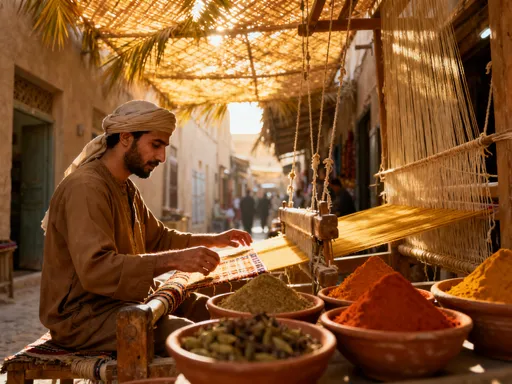
The Blue Souq, officially known as Sharjah Central Market, is not just a place to shop—it’s a place to experience. With over 650 shops housed beneath a striking blue-tiled roof that mimics the domes of historic mosques, this sprawling marketplace is a sensory immersion. The moment you step inside, you’re met with a wave of scent: saffron and cumin from spice stalls, sandalwood from incense vendors, the sharp tang of fresh fish from the seafood section. Sounds layer upon sounds—the rhythmic chopping of meat, the call-and-response of bargaining, the hum of ceiling fans cutting through warm air. Light filters in through high windows, casting patterns on the mosaic floor, while the scent of cardamom coffee drifts from small cafes tucked between shops.
Navigating the Blue Souq can feel overwhelming at first. Aisles branch off like capillaries, leading to unexpected discoveries: a stall selling hand-embroidered thobes, another offering vintage perfume bottles, a third piled high with dates in every variety imaginable. I got lost twice—and each time, it led to something memorable. Once, I stumbled upon a tiny tea shop where an elderly vendor served me karak chai in a small glass, sweet and strong, while telling stories of the souk’s early days. Another time, I found a craftsman repairing a traditional *dallah* (coffee pot), his hands moving with practiced ease over copper and brass.
The key to enjoying the Blue Souq is to slow down. This is not a place for checklist tourism. Instead, embrace the rhythm of the market—pause, observe, engage. Bargaining is expected, but it’s not about winning; it’s about interaction. A respectful offer, a smile, a willingness to walk away if the price feels too high—these are the unspoken rules. Vendors appreciate sincerity more than aggression. And when you do make a purchase, whether it’s a kilo of saffron, a handwoven basket, or a silver *khanjar* (dagger), you’re not just buying an object—you’re taking home a piece of craftsmanship that carries history.
For families, the souk offers endless fascination. Children are drawn to the toy stalls, the colorful fabrics, the rows of glittering costume jewelry. Many shops are family-run, with multiple generations working side by side. This sense of continuity—of skills passed down, of businesses sustained across decades—adds depth to the experience. Practical tips include visiting in the late morning or early evening to avoid peak heat, carrying cash (many vendors don’t accept cards), and wearing comfortable shoes. Most importantly, come with curiosity. Ask questions. Let the market unfold at its own pace. In the Blue Souq, the journey matters far more than the destination.
Green Oases in the Urban Fabric: Al Mahatta and Al Khan Neighborhoods
Amid the stone and steel of urban life, Sharjah carves out spaces for breath, for stillness, for green. Two neighborhoods that embody this balance are Al Mahatta and Al Khan—distinct in character but united in their commitment to integrating nature into daily life. Al Mahatta, once the site of the emirate’s first airport, has been thoughtfully reimagined. The old terminal now houses a museum dedicated to aviation history, its vintage planes and photographs telling the story of Sharjah’s early connections to the world. But surrounding it are lush parks, shaded walking paths, and quiet plazas where families gather under palm trees. The contrast is striking: a tribute to progress, nestled within nature’s calm.
Al Khan, stretching along the Khalid Lagoon, offers a different kind of serenity. Here, the focus is on water and movement. A wide promenade traces the creek, lined with benches, exercise stations, and children’s play areas. On any given evening, you’ll see joggers, cyclists, and strollers—locals of all ages enjoying the cool breeze off the water. The area is dotted with small cafes and kiosks serving fresh juice and light snacks, making it easy to linger. What stands out is the sense of inclusivity: women in abayas walk with friends, children chase bubbles, elderly couples sit side by side in silence. This is public space as it should be—accessible, safe, and alive with quiet joy.
Green spaces like these are not luxuries; they are essential to urban well-being. Studies have shown that access to parks and natural environments reduces stress, encourages physical activity, and strengthens community bonds. In Sharjah, these benefits are clearly visible. Parents bring toddlers to splash pads, teenagers practice skateboarding near designated zones, and fitness groups gather for morning yoga. The city has invested in infrastructure—bike lanes, clean restrooms, shaded seating—ensuring that these areas are not just beautiful but functional.
For visitors, experiencing Al Mahatta and Al Khan means stepping into the rhythm of local life. Biking along the Corniche is one of the most rewarding ways to explore—rental stations are available, and the flat terrain makes it easy for all ages. Early mornings are ideal, when the air is fresh and the light soft. Families will appreciate the playgrounds and picnic areas, while solo travelers may find peace in a quiet corner with a book. Public transport access is good, with bus routes serving both neighborhoods, and taxis readily available. These green oases remind us that a city’s soul isn’t only in its monuments—it’s also in the spaces where people simply live, breathe, and belong.
Waterfront Wonders: The Enchanting Khaled Lagoon Corniche
As the sun begins its descent, the Khaled Lagoon Corniche transforms. What was once a quiet stretch of waterfront becomes a living canvas of light, movement, and sound. Palm trees sway in the evening breeze, their shadows stretching across the paved walkway. Art installations—some abstract, others inspired by maritime heritage—catch the fading light, casting intricate patterns on the ground. Families spread out on blankets, children fly kites shaped like falcons and fish, and couples stroll hand in hand along the water’s edge. Across the lagoon, the domes of a mosque glow softly in the dusk, their reflection shimmering on the calm surface. This is not just a place to visit—it’s a place to feel.
The Corniche is one of Sharjah’s most beloved public spaces, and for good reason. It offers a rare combination of beauty, accessibility, and emotional resonance. Unlike crowded tourist spots, it feels intimate, even at its busiest. The atmosphere is gentle, unhurried. Vendors sell roasted corn and sugarcane juice, their carts glowing under warm lights. Small cafes serve karak chai and dates, their outdoor seating filled with locals catching up after work. The pace is slow, the mood reflective. This is where the city exhales.
For travelers, the Corniche offers a powerful lesson in mindful observation. Instead of rushing from landmark to landmark, here you are invited to pause, to watch, to listen. The sounds—the lapping of water, the distant laughter of children, the soft chime of a bicycle bell—create a kind of music unique to this place. The scent of salt and jasmine mingles in the air. The temperature drops just enough to make walking comfortable. This is the magic of waterfront districts: they reveal a city’s soul not through monuments, but through moments.
Timing your visit around sunset ensures the most memorable experience. The sky shifts from gold to rose to deep indigo, and the city lights begin to sparkle. For a different perspective, consider taking the water taxi, which glides silently across the lagoon, offering panoramic views of the shoreline. Alternatively, the metro station nearby provides easy access for those arriving from other parts of the emirate. Dining options are low-key but satisfying—think grilled fish, hummus, and fresh fruit platters served with a view. There’s no need for extravagance here. The real luxury is simply being present, in a place where time slows and connection deepens.
Beyond the Tourist Lens: Living Like a Local in Residential Districts
Some of my most meaningful moments in Sharjah happened not in famous landmarks, but in quiet, unmarked neighborhoods where no tour buses go. I remember turning down a side street in a residential area just before dusk and finding a group of boys playing football with a makeshift ball, their shouts echoing off pastel-colored villas. An older man sat on his doorstep, sipping tea and smiling at the scene. A woman hung laundry on a balcony, humming a tune I didn’t recognize. There were no signs, no plaques, no guided narratives—just life, unfolding in its ordinary beauty.
These moments reminded me that travel is not just about seeing new places, but about seeing them anew. Stepping beyond the tourist lens—away from souks and museums, into the rhythm of daily life—allows for a deeper kind of understanding. It’s in these quiet districts that you begin to grasp the texture of Emirati life: the importance of family, the value of community, the quiet dignity of routine. Children walk home from school in neat rows, neighbors exchange greetings in Arabic, and the call to prayer marks the passage of time like a gentle heartbeat.
Exploring residential areas requires sensitivity. These are not attractions; they are homes. The key is to be present without intruding. Walking slowly, avoiding loud conversations, and refraining from photographing people without permission are simple but important gestures of respect. Dressing modestly remains essential. Transportation options include taxis or rental cars, both of which offer flexibility while minimizing disruption. Public buses also serve many neighborhoods, providing an authentic glimpse into local commuting habits.
What makes these experiences so powerful is their unpredictability. You can’t plan for the moment a child offers you a piece of candy, or an elder invites you to sit for tea. But by choosing to wander without agenda, you create space for such moments to happen. Slow, aimless walking—what some call “flânerie”—becomes a form of cultural immersion. In these quiet streets, the city reveals itself not in grand statements, but in small, fleeting gestures of warmth and welcome.
Why Sharjah’s Streets Matter: A Final Reflection on Authentic Travel
In a world of curated itineraries, influencer checklists, and five-star experiences, Sharjah stands apart. Its charm is not polished or packaged—it is unvarnished, alive, and deeply human. The emirate’s neighborhoods—historical, artistic, commercial, natural—form a mosaic of Emirati life, each piece contributing to a larger story of resilience, creativity, and belonging. To walk its streets is to engage with a culture that values depth over dazzle, continuity over change, and connection over convenience.
Sharjah invites travelers to rethink what travel can be. It challenges the notion that worth is measured in landmarks visited or photos taken. Instead, it offers something quieter but more lasting: the chance to listen, to observe, to be present. In Al Majarrah, you hear the echo of centuries. In Al Ras, you see tradition reimagined. In the Blue Souq, you taste the richness of daily life. In Al Khan and the Corniche, you feel the pulse of community. And in the quiet residential lanes, you witness the simple beauty of ordinary moments.
This is authentic travel—not as a checklist, but as a practice. It asks us to slow down, to look closely, to engage with humility and curiosity. It reminds us that the soul of a place is not found in its monuments alone, but in its people, its rhythms, its unspoken stories. Sharjah does not shout; it whispers. And if you listen, it will tell you something true.
So go beyond the guidebook. Step off the expected path. Let the streets guide you. Explore with an open heart, a respectful presence, and a willingness to be surprised. In Sharjah, every alley has a story. Every door holds a memory. And every step can be a conversation—with the past, with the present, and with the quiet, enduring spirit of a place that remembers who it is.