This Is What Happens When You Drive South Africa’s Garden Route
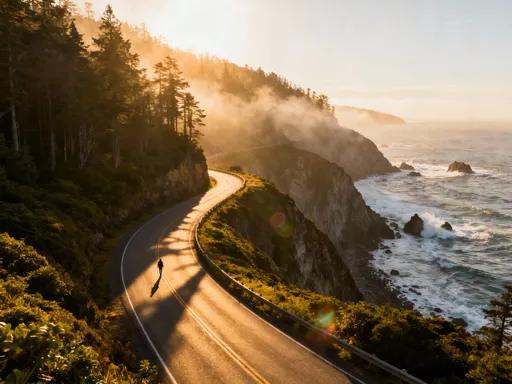
The Garden Route isn’t just a scenic drive—it’s a living postcard of South Africa’s wild beauty. From misty forests to ocean cliffs, every mile delivers something unforgettable. I’ve explored countless coastal roads, but this one? It’s different. The mix of adventure, nature, and culture creates moments that stick with you long after the trip ends. Whether you're hiking ancient trails or kayaking through tranquil lagoons, the experiences here don’t just impress—they transform.
The Soul of the Garden Route: More Than Just a Road
Stretching approximately 300 kilometers along South Africa’s southeastern coastline, the Garden Route is far more than an itinerary highlight—it is a living corridor of natural and cultural abundance. Beginning near Mossel Bay in the west and winding eastward to the Storms River area, this celebrated route traces the edge of the Indian Ocean, where mountains meet sea and forests spill onto sandy shores. The name itself, coined in the late 20th century, reflects the region’s lush, green landscapes that flourish thanks to a mild climate and abundant rainfall. But the Garden Route is not merely about visual appeal; it represents a dynamic blend of ecosystems, including indigenous Afro-montane forests, coastal fynbos—a unique floral kingdom found only in South Africa—and expansive wetlands that support rich biodiversity.
What sets this route apart is its ability to connect diverse environments and communities within a relatively compact stretch of coastline. Travelers pass through small towns like Wilderness, Knysna, and Plettenberg Bay, each with its own character, history, and local economy rooted in sustainable tourism, fishing, and crafts. These towns act as gateways to nature while preserving a sense of authenticity rarely found in heavily touristed areas. The region is also home to several protected areas, including national parks and nature reserves, which safeguard critical habitats for species such as the Knysna loerie, the Cape clawless otter, and the endangered Cape parrot. These conservation efforts underscore the route’s role not just as a destination, but as a model for eco-conscious travel.
The Garden Route’s cultural significance runs deep. For centuries, indigenous Khoi and San peoples lived in harmony with this land, relying on its resources for food, medicine, and spiritual practices. Today, their legacy is honored through interpretive centers, guided heritage walks, and community-led tourism initiatives that invite visitors to learn about traditional knowledge systems. This cultural continuity enriches the journey, turning it into more than a scenic drive—it becomes a narrative of resilience, adaptation, and respect for nature. As roads curve along cliff edges and forests whisper with the rustle of ancient trees, the Garden Route reveals itself as a place where geography, ecology, and human history converge in profound ways.
Why the Garden Route Stands Out in African Travel
Among Africa’s many iconic travel experiences—from safaris in the Serengeti to trekking in the Atlas Mountains—the Garden Route holds a distinctive place. Unlike remote wilderness expeditions or high-adventure treks, this coastal journey offers accessibility without compromising on wonder. It appeals to a broad spectrum of travelers: families seeking safe, scenic drives; couples looking for romantic seaside retreats; and solo adventurers eager to explore nature on foot, by kayak, or from the treetops. Its growing reputation is reflected in visitor statistics; according to South African Tourism, the Western and Eastern Cape regions collectively welcomed over 2.3 million domestic and international tourists in 2023, with the Garden Route consistently ranking among the most popular itineraries.
What makes the Garden Route unique is its balance of infrastructure and authenticity. Well-maintained roads, clear signage, and a range of accommodation options—from eco-lodges to boutique guesthouses—make it easy to navigate, even for first-time visitors to South Africa. Yet, unlike overly commercialized destinations, the route retains a sense of untouched beauty. You won’t find sprawling resorts or crowded boardwalks here. Instead, the experience feels intimate and immersive. Small-town charm prevails, with local artisans selling handmade crafts, farmers offering fresh produce at roadside stalls, and restaurants highlighting regional flavors such as Knysna oysters, wild garlic, and sustainably caught line fish.
Travel experts frequently cite the Garden Route as one of the world’s great coastal drives, often comparing it to California’s Highway 1 or Australia’s Great Ocean Road. But what it offers that many others do not is ecological diversity packed into a compact space. Within a single day, a traveler can walk through a misty forest, swim in a turquoise lagoon, and watch the sunset over a windswept beach—all without long, exhausting drives. This density of experience, combined with South Africa’s renowned hospitality, creates a travel rhythm that feels both enriching and restorative. For those seeking a journey that combines ease with depth, beauty with meaning, the Garden Route delivers in ways few other African destinations can match.
Forest Adventures: Walking Among Giants in Tsitsikamma
At the eastern end of the Garden Route lies one of its crown jewels: Tsitsikamma National Park, part of the larger Garden Route National Park managed by South African National Parks (SANParks). This protected wilderness is a sanctuary of towering yellowwood, stinkwood, and ironwood trees, some of which have stood for over 800 years. The forest floor is carpeted with ferns, mosses, and the occasional orchid, while sunlight filters through the canopy in golden shafts, creating an almost cathedral-like atmosphere. It is here that visitors truly understand the phrase “walking among giants.” The air is cool and fragrant, filled with the scent of damp earth and resinous bark, and the only sounds are the distant crash of waves, the call of the olive sunbird, and the soft crunch of gravel beneath hiking boots.
The most famous trail in the park is the Otter Trail, a five-day, 42-kilometer hike that follows the rugged coastline from Storms River Mouth to Nature’s Valley. Regarded as one of South Africa’s premier backpacking experiences, it combines dense forest paths with cliffside scrambles and secluded beach campsites. However, for those with limited time or less experience, shorter hikes like the Suspension Bridge Trail or the Waterfall Trail offer equally breathtaking views. The Suspension Bridge, which spans the Storms River Gorge, provides a heart-pounding vantage point over the churning waters below, while the Waterfall Trail leads to a serene cascade tucked deep within the forest—a perfect spot for quiet reflection.
What makes these trails exceptional is not just their beauty, but their ecological significance. The Tsitsikamma forest is one of the last remaining stands of indigenous coastal forest in South Africa, and its preservation is critical for maintaining biodiversity. Rare species such as the Knysna turaco and the blue duiker find refuge here, and marine life thrives in the adjacent marine protected area, where abalone and octopus are safeguarded from overharvesting. For hikers, this means every step is taken through a living, breathing ecosystem—one that demands respect and mindfulness. SANParks requires permits for all trails, limits group sizes, and enforces strict leave-no-trace principles to minimize human impact. Travelers are encouraged to bring sturdy footwear, rain gear, and ample water, and to hike during the dry season (April to October) when paths are safer and visibility is clearer.
Water Wonders: Kayaking, Whale Watching, and Lagoon Explorations
While the forests captivate with their stillness, the waterways of the Garden Route pulse with life and movement. One of the most peaceful ways to experience this is by kayak, particularly in the Wilderness Section of the Garden Route National Park. Here, the Touw, Groenvlei, and Swartvlei rivers converge into a network of calm, reed-lined channels that meander through wetlands and under ancient milkwood trees. Paddling through this labyrinth at sunrise, when mist hovers above the water and kingfishers dart between branches, feels like entering a hidden world. Guided eco-tours are widely available and led by local experts who share insights about bird species, plant life, and the delicate balance of this estuary system.
Further west, along the coast, another aquatic wonder unfolds between June and November: the annual migration of southern right whales. Though Hermanus—renowned as one of the best land-based whale-watching spots in the world—is slightly beyond the traditional Garden Route, it remains an accessible and unforgettable addition to any itinerary. From elevated viewpoints along the cliffs, visitors can watch these majestic creatures breach, tail-slap, and nurse their calves in the sheltered bays below. Responsible viewing practices are emphasized: maintaining distance, avoiding loud noises, and following guidelines set by local conservation groups ensure that tourism does not disturb these recovering populations.
For those who prefer to get closer to the action, boat-based whale-watching tours operate out of Gansbaai and Plettenberg Bay, offering sightings not only of whales but also of dolphins, seals, and even the occasional great white shark in deeper waters. Meanwhile, lagoon cruises in Knysna provide a gentler experience, gliding across the famous Knysna Estuary beneath the iconic Heads—the twin cliffs that guard the lagoon’s entrance. These cruises often include oyster-tasting stops, connecting travelers to the region’s culinary heritage. Whether floating silently in a kayak or watching a whale explode from the ocean’s surface, the water-based experiences of the Garden Route offer a profound sense of connection—to nature, to rhythm, and to the quiet power of the natural world.
Thrills Beyond Nature: Bungee, Ziplining, and Treetop Canopy Tours
For travelers seeking a rush of adrenaline, the Garden Route delivers in spectacular fashion. At Bloukrans Bridge, which spans the border between the Western and Eastern Cape, adventurers can take the plunge from the highest commercial bungee jump in Africa—216 meters above the Bloukrans River. Operated by Face Adrenalin, a company with over two decades of safety excellence, the jump is not for the faint of heart, but it is designed with rigorous protocols, redundant equipment, and trained staff to ensure every leap is as safe as it is thrilling. The freefall lasts nearly nine seconds, followed by a rebound that swings you through the gorge, surrounded by untouched fynbos and the roar of the river below. It’s an experience that combines extreme sport with awe-inspiring scenery, leaving participants breathless in every sense.
For those who prefer to stay slightly closer to the treetops, canopy tours in Knysna and Tsitsikamma offer a different kind of elevation. The Knysna Forest Canopy Tour, for example, consists of a series of zip lines strung between indigenous trees, allowing guests to glide over the forest floor like birds. Each platform is built with minimal environmental impact, using suspension systems that avoid damaging trunks or roots. Guides provide commentary on the forest ecosystem, pointing out everything from wood-boring beetles to medicinal plants used by local healers. The entire experience lasts about two hours and is suitable for most fitness levels, making it a popular family activity.
What’s remarkable about these adventure offerings is how they coexist with conservation. Operators are required to adhere to strict environmental guidelines, often partnering with local parks and research institutions to monitor impact. Many also contribute to community development programs, employing local guides and supporting youth training initiatives. This integration of adventure and responsibility ensures that thrill-seeking does not come at the expense of the natural world. Instead, it fosters a deeper appreciation for the environment—because when you soar above a forest canopy or freefall over a pristine river, you’re not just seeking excitement; you’re becoming part of a landscape that demands care and respect.
Hidden Gems: Off-the-Beaten-Path Experiences
Beyond the well-known attractions, the true magic of the Garden Route often lies in its quieter moments. Detours to lesser-known spots reveal the soul of the region—places where time slows, and connection deepens. One such gem is the Harkerville Forest Market, a weekly craft fair nestled along the N2 highway between Plettenberg Bay and Knysna. Run entirely by local artisans, the market features hand-carved wooden sculptures, beaded jewelry, organic soaps, and home-baked goods. Conversations here are warm and unhurried, and every purchase supports a family enterprise. It’s a reminder that travel is not just about seeing, but about engaging—with people, with stories, with the handmade and heartfelt.
Another hidden delight is the oyster farming community near Knysna. While the town is famous for its oyster festival each July, few visitors take the time to visit the actual farms along the estuary. Guided tours offer a behind-the-scenes look at how these briny delicacies are cultivated, from spat collection to harvest. Participants can sample fresh oysters straight from the water, paired with a glass of local Sauvignon Blanc, while learning about sustainable aquaculture practices that protect the lagoon’s health. Similarly, quiet picnic spots like the Groenvlei Jetty or the secluded beach at Goukamma Nature Reserve provide space for reflection, away from the busier hubs. These places are not marked by billboards or crowds, but by stillness, birdcall, and the gentle lap of water against the shore.
Even a simple roadside stop can become a highlight. Imagine pulling over at a wooden stall selling rooibos tea, homemade rusks, and jars of wild honey collected from fynbos-covered hills. The vendor, a grandmother with a wide-brimmed hat, shares stories of her childhood summers spent swimming in the same lagoons you’ve just visited. These moments—unscripted, unhurried, and deeply human—are what elevate the Garden Route from a scenic drive to a journey of meaning. They remind us that the best travel experiences are not always the most advertised, but the ones that find you when you’re willing to wander just a little further off the map.
Planning Your Journey: Timing, Transport, and Travel Smart
Successfully experiencing the Garden Route requires thoughtful planning, especially given its range of activities and seasonal variations. The ideal time to visit is during the Southern Hemisphere’s spring and early summer—September to January—when temperatures are mild, rainfall is minimal, and wildlife activity peaks. September brings blooming fynbos, October offers excellent hiking conditions, and November marks the beginning of whale season, extending through May. While December and January are peak holiday months in South Africa, they also bring larger crowds and higher accommodation rates, so booking several months in advance is advisable, particularly for popular lodges and guided tours.
Most travelers choose to self-drive, as it offers the greatest flexibility to explore at one’s own pace. The N2 highway runs parallel to the coast and is well-maintained, with clear signage and regular fuel stations. However, many of the most rewarding experiences lie just off the main road, accessible via smaller R-roads that require careful navigation. A reliable GPS or offline mapping app is essential, as cellular connectivity can be spotty in forested or remote areas. Rental cars with sufficient ground clearance are recommended, especially if planning to visit nature reserves or unpaved trails.
Accommodation options are diverse and widely distributed. Eco-lodges like the Tsitsikamma Village Inn emphasize sustainability, using solar power and rainwater harvesting. Family-run guesthouses in towns like Wilderness and Knysna offer personalized service and home-cooked meals, while camping sites within national parks provide immersive forest or seaside stays. For those who prefer not to drive, guided small-group tours are available from Cape Town and George, often including meals, activities, and expert narration. Regardless of the travel style, a recommended pace is seven to ten days, allowing enough time to explore key sites without rushing. Key experiences such as the Otter Trail, Bloukrans bungee, and lagoon kayaking should be booked in advance due to limited availability. Packing essentials include layered clothing, waterproof gear, hiking shoes, sunscreen, and a reusable water bottle to support the region’s strong environmental ethos.
Why the Garden Route Stays With You
The Garden Route does not simply offer sights—it offers sensations. It is the cool mist on your face as you cross the Suspension Bridge, the taste of a freshly shucked oyster at sunset, the silence of a forest so deep that your breath becomes the loudest sound. These moments accumulate, not as checklist items, but as impressions that settle into memory like footprints in soft sand. Long after the journey ends, travelers find themselves recalling the curve of a lagoon, the cry of a fish eagle, or the warmth of a stranger’s smile at a country market. It is this emotional resonance, more than any photograph or souvenir, that defines the route’s lasting impact.
What makes the Garden Route truly special is its ability to harmonize contrast: adventure and stillness, nature and community, movement and mindfulness. It invites you to slow down while filling each day with discovery. There are no grand monuments or ancient ruins, yet the landscape feels equally monumental—because it is alive, evolving, and deeply interconnected. In a world where travel can sometimes feel transactional, the Garden Route restores a sense of wonder. It reminds us that beauty exists not in perfection, but in authenticity; not in speed, but in presence.
Ultimately, this journey is not just about where you go, but who you become along the way. You return home not only with stories, but with a renewed sense of balance, a deeper appreciation for simplicity, and the quiet certainty that some places do more than impress—they transform. If you seek travel that nourishes the soul as much as it delights the eye, the Garden Route awaits. Drive it with intention. Experience it with openness. And let it, in its gentle, powerful way, change you.