Art Under My Feet: How Santiago’s Hidden Galleries Transformed My Pilgrimage
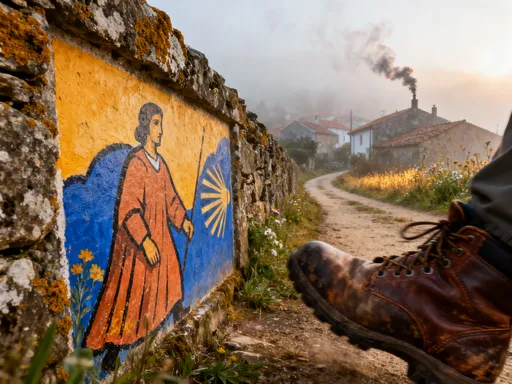
Walking the Camino to Santiago wasn’t just about the path—it was what I discovered along it. Unexpected murals, quiet chapels turned installations, and street art whispering stories of centuries past. I didn’t expect a pilgrimage to become an open-air gallery. But there it was: creativity blooming in stone corners, wooden doors, and forgotten walls. This journey wasn’t just spiritual—it was artistic, raw, and deeply human. You don’t just walk to Santiago—you see it. Every step revealed textures, colors, and symbols that transformed the landscape into a living museum. For women who seek meaning, beauty, and quiet transformation, this pilgrimage offers more than tradition—it offers revelation through art.
The Camino as a Living Canvas
The Camino de Santiago has long been revered as a spiritual trail, drawing millions over centuries in search of reflection, redemption, or renewal. Yet beyond its religious significance lies a quieter, evolving identity—one that turns the entire route into an organic gallery of human expression. As pilgrims traverse the rugged hills of northern Spain, they pass through villages where history and creativity converge on every surface. Churches double as exhibition halls; hostel walls bear hand-painted blessings from past travelers; even stone bridges carry carved messages etched by anonymous artists centuries ago. The act of walking—repetitive, meditative, grounding—sharpens the senses, making pilgrims unusually receptive to visual storytelling.
In towns like O Cebreiro, perched high in the misty mountains of Galicia, traditional thatched pallozas—ancient dwellings with stone foundations and wooden frames—have become backdrops for temporary art displays. Local artists use these spaces to explore themes of memory, migration, and resilience, often weaving Christian symbolism with modern commentary. One installation featured a series of suspended fabric scrolls painted with prayers in multiple languages, fluttering gently in the wind like whispers from across time. These moments are not staged for tourists but emerge organically, shaped by the rhythm of pilgrimage and the openness of rural communities.
Further along the route, in Arzúa, the weekly market transforms the town square into a sensory tapestry. Vendors sell handmade ceramics adorned with Celtic knots and botanical motifs, while musicians perform folk songs beneath archways covered in vibrant frescoes. The murals themselves tell stories—of harvests, of saints, of women leading processions through fog-laden fields. Unlike curated museum exhibits, these artworks are unguarded, unannounced, and often ephemeral. They exist because someone felt moved to create, and another felt moved to preserve. This spontaneity is what gives the Camino its artistic soul: it is not a static display but a continuous conversation between past and present, sacred and secular, local and global.
Santiago’s Urban Art Pulse Beyond the Cathedral
When most envision Santiago de Compostela, their minds turn immediately to the grandeur of the cathedral—the soaring towers, the intricate façade, the throngs of pilgrims gathering in awe. And rightly so: the cathedral remains a masterpiece of Romanesque and Baroque architecture, a symbol of faith and endurance. But to focus only on the sanctuary is to miss the city’s beating artistic heart, which pulses strongest in its side streets, alleyways, and hidden courtyards. Here, contemporary art thrives in dialogue with antiquity, transforming Santiago into a city where every corner holds the possibility of surprise.
Wander beyond the Praza do Obradoiro, and you’ll find walls alive with murals—some political, some poetic, many deeply personal. A recurring theme is the image of the scallop shell, the universal symbol of the Camino, reimagined in bold colors, abstract forms, and even three-dimensional sculptures made from recycled materials. One striking piece in the Rúa do Vilar depicts a woman’s face formed entirely from fragments of old pilgrim credentials, each bearing a name, a date, a country. It is both a tribute and a meditation on identity, belonging, and the passage of time.
The city actively supports this creative energy through public art programs that invite local and international artists to contribute. Each year, the Santiago Street Art Festival brings painters, sculptors, and performance artists to revitalize neglected spaces. These are not acts of vandalism but acts of restoration—breathing new life into aging buildings while honoring the city’s layered history. A former convent, now repurposed as a cultural center, hosts rotating installations that blend sound, light, and movement. One exhibit used projected shadows to trace the footsteps of medieval pilgrims across the stone floor, creating an immersive experience that blurred the line between past and present.
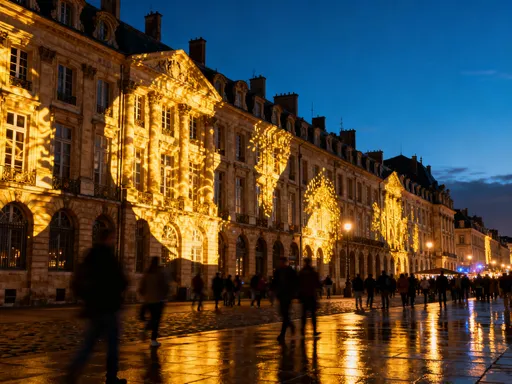
What makes this artistic evolution so powerful is its balance. The cathedral still stands as the spiritual anchor, but the city refuses to be frozen in time. Graffiti coexists with Gothic arches, stencil art dances beside centuries-old reliefs, and digital projections illuminate stone facades during special festivals. This harmony does not erase history—it enriches it. For the pilgrim who arrives weary from weeks of walking, this dynamic contrast offers a profound reminder: transformation is not the enemy of tradition; it is its companion.
Encounters with Artist-Run Spaces Along the Trail
While much of the Camino’s art appears spontaneously, there are also intentional spaces dedicated to creative exchange—small galleries, community workshops, and artist collectives tucked into villages that might otherwise go unnoticed. These are not grand institutions but humble outposts of inspiration, often run by locals who believe that art belongs to everyone, especially those on a journey. Pilgrims who pause long enough to step inside discover more than paintings on walls—they find connection, conversation, and a chance to rest not just the body, but the spirit.
In the village of Portomarín, where the old church was relocated stone by stone to make way for a reservoir, a cultural center now occupies a repurposed granary. Inside, rotating exhibitions feature works by Galician painters, ceramicists, and textile artists. One exhibit showcased tapestries woven from wool dyed with local plants—rosemary, heather, and oak galls—each pattern representing a different stage of the pilgrim’s journey. Visitors were invited to touch the fabrics, feeling the texture of the threads, understanding how color and craft carry meaning. Nearby, a small room offered sketchbooks and pencils, encouraging pilgrims to leave behind their own drawings or written reflections.
Further east, near the town of Melide, a group of artists converted an abandoned barn into a seasonal residency space. During peak pilgrimage months, they host short workshops in printmaking, watercolor, and nature-based sculpture. Participation is free, though donations support the upkeep of the space. Many attendees are women traveling alone, seeking not only physical rest but emotional grounding. One participant described how carving a simple wooden stamp—shaped like a walking staff—helped her process grief she had carried for years. “It wasn’t about the art,” she said. “It was about giving form to something invisible.”
These spaces thrive because they reject exclusivity. There are no entry fees, no curatorial gatekeeping, no expectation of expertise. They exist to serve the traveler, the seeker, the quiet observer. And in doing so, they embody the true spirit of the Camino: openness, generosity, and the belief that beauty can emerge in the most unexpected places. For women who have spent years tending to homes, families, and responsibilities, these moments of creative freedom can feel like rediscovery—of self, of voice, of wonder.
The Role of Light, Stone, and Silence in Pilgrimage Aesthetics
Art on the Camino is not limited to paint and canvas. Some of its most powerful expressions come from the natural world itself—the way morning light spills over the eucalyptus groves of Galicia, casting long blue shadows on the path; the way fog curls around ancient stone walls like a veil; the sound of rain tapping on slate roofs as pilgrims huddle under doorways. These are not mere backdrops but essential elements of an uncurated, ever-changing installation shaped by time, weather, and the human presence.
Consider the paving stones beneath your feet. Centuries of footsteps have worn them smooth, creating undulating surfaces that catch the light differently at various hours. In the late afternoon, when the sun hangs low, these stones glow like amber, revealing veins of quartz and mica that seem to pulse with memory. Touch them, and you feel the coolness of history—the thousands who walked before, the prayers whispered, the songs hummed in silence. This tactile experience is part of the artistry: it engages not just the eyes but the hands, the feet, the entire body.
Light plays a transformative role throughout the journey. In rural chapels, sunlight filters through stained glass windows, projecting kaleidoscopic patterns onto stone floors. One small chapel near Palas de Rei features a single pane depicting a woman carrying a lantern—believed to represent the Virgin Mary guiding lost travelers. At dawn, when the first rays strike the glass, the image seems to come alive, the light spreading across the floor like a path. Pilgrims often sit in stillness during these moments, absorbing not just the visual beauty but the sense of being seen, of being guided.
Silence, too, is a medium. In the early hours, before other walkers appear, the trail belongs to birdsong, rustling leaves, and the soft crunch of gravel underfoot. This quiet allows space for internal reflection, for noticing details that might otherwise be missed—a carved rose on a doorframe, a patch of lichen shaped like a map, a ribbon tied to a tree in memory of someone loved. These are not grand gestures, but they carry weight. They remind us that art does not need to be loud to be meaningful. Sometimes, the most profound beauty is found in stillness, in absence, in the spaces between.
How Walking Shapes Artistic Perception
The physical act of walking long distances alters perception in subtle but profound ways. As the body settles into a steady rhythm, the mind begins to slow, to open, to notice. What once seemed ordinary—a weathered door, a cracked wall, a cluster of wildflowers—becomes worthy of attention. This shift is not mystical; it is neurological. Studies in environmental psychology suggest that rhythmic movement, especially in natural settings, enhances mindfulness, reduces mental fatigue, and increases creative thinking. On the Camino, this translates into a heightened sensitivity to visual detail, emotional resonance, and symbolic meaning.
Many pilgrims report an urge to document their journey—not just through photographs, but through drawing, writing, or collecting small natural objects. One woman carried a small sketchbook the entire way, stopping each day to draw a single object: a bell tower, a pair of worn boots, a loaf of bread on a market stall. She later said the practice helped her stay present, turning each day into a kind of visual journal. Another pilgrim began photographing door carvings, fascinated by how each village developed its own symbolic language—birds for freedom, vines for connection, keys for passage.
This creative impulse is not limited to those who consider themselves artists. The Camino democratizes expression. A mother from Ireland, walking in memory of her late sister, began writing short poems on the backs of her pilgrim passport stamps. She left copies in hostel common rooms, never signing them. “It wasn’t about credit,” she explained. “It was about leaving something behind—like a breadcrumb trail of feeling.” These small acts are part of the trail’s artistic ecosystem: personal, intimate, and deeply human.
Movement fuels creativity not because it inspires grand ideas, but because it creates space for them. When the mind is not racing, when the body is engaged in simple, repetitive action, insights emerge. A shape in the clouds becomes a metaphor. A conversation with a stranger feels like poetry. The way light hits a puddle after rain looks like a painting. These are not hallucinations—they are moments of clarity, made possible by the act of walking. For women who have spent years moving through life at a hurried pace, managing schedules and responsibilities, this return to slowness can feel like liberation.
Practical Tips for the Art-Curious Pilgrim
If you’re drawn to the artistic dimension of the Camino, a few thoughtful choices can enhance your experience without disrupting the simplicity of the journey. First, consider your route. While all Camino paths offer beauty, the Camino Francés remains the most diverse in terms of visual richness, passing through varied landscapes and historic towns where artistic interventions are most frequent. The final 200 kilometers, from Sarria to Santiago, are especially accessible for those with limited time, yet still abundant in creative encounters.
Plan your stops with intention. Towns like Palas de Rei, Arzúa, and Melide have strong artistic presences, whether through public murals, cultural centers, or seasonal exhibitions. Ask at local albergues (pilgrim hostels) about nearby galleries or community events—many smaller initiatives are not listed in guidebooks but are known to residents. Some villages host evening readings, music performances, or craft fairs during the summer months, offering opportunities to engage directly with local artists.
To deepen your connection, carry lightweight tools for creative expression. A small watercolor set, a compact sketchbook, or a journal with thick paper can invite daily reflection. Even if you don’t consider yourself an artist, the act of drawing or writing slows perception, helping you absorb details you might otherwise overlook. A simple pencil and notepad weigh almost nothing but can become cherished companions. If photography is your medium, consider limiting yourself to a few intentional shots per day rather than constant documentation—this encourages mindfulness and prevents the journey from becoming a performance for screens.
When encountering artwork—whether a mural, a sculpture, or a hand-painted sign—approach with respect. Many pieces are community-owned, created with care and meaning. Avoid touching fragile surfaces, and never remove natural or artistic objects from their setting. If you wish to support local creators, look for nearby shops selling handmade crafts, or make a small donation at artist-run spaces. Remember, the goal is not to collect souvenirs, but to carry forward the feeling—the memory of beauty witnessed, the sense of connection fostered.
Why This Journey Matters in a Digital Age
In a world saturated with digital images, where art is often consumed in seconds through scrolling feeds, the Camino offers a radical alternative: art that must be earned. It cannot be viewed from a screen or downloaded with a click. It demands presence, effort, and attention. You must walk to it. You must arrive tired, perhaps hungry, your feet aching. And in that state of vulnerability, the art feels more real, more immediate, more deeply felt.
This is not nostalgia for a pre-technological era, but a recognition of what we’ve lost—and what we can reclaim. The Camino does not reject modernity; it provides balance. It reminds us that beauty is not always convenient, that meaning often lies off the main path, and that transformation rarely happens while sitting still. For women who have spent years navigating the demands of family, work, and technology, this pilgrimage offers a rare gift: the chance to move slowly, to see clearly, to create without pressure, and to be moved by what is real.
Ultimately, the artistic journey along the Camino is not about mastering technique or collecting masterpieces. It is about reawakening the eye, the heart, the hand. It is about learning to see the sacred in the ordinary—the way light falls on a wall, the way a stranger’s smile echoes in memory, the way a single line drawn in a sketchbook can capture a moment of peace. When you return home, you may not bring back a gallery of images, but you will carry something more valuable: a changed way of seeing. And that shift—quiet, enduring, personal—may be the most beautiful creation of all.